
What it is
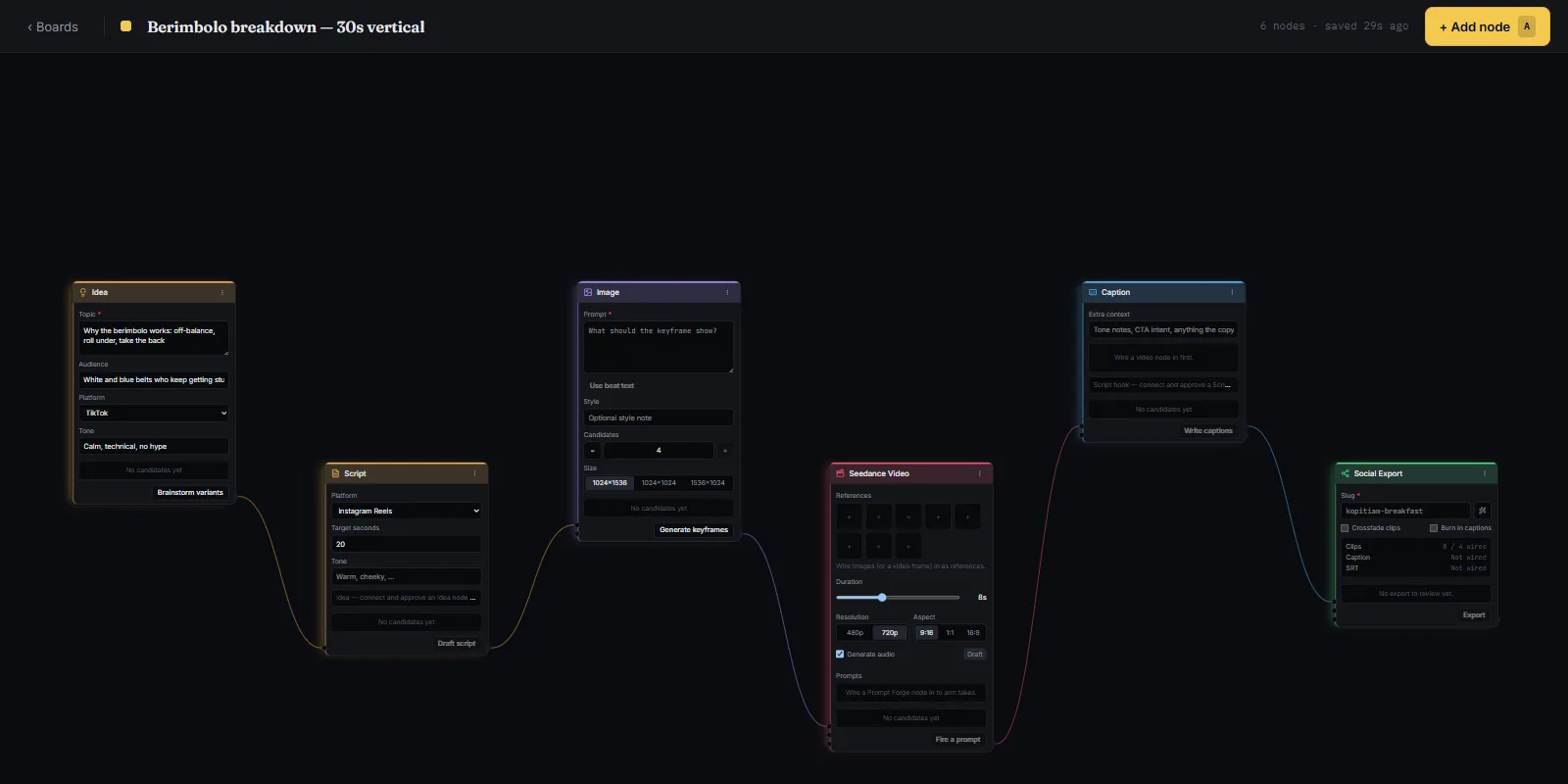
ReelForge is a ComfyUI-style node board for producing vertical social video. You build a chain (Idea, Script, Image keyframes, video generation, Captions, Export) and run it. The rule that shapes everything else: nothing auto-cascades. Every generative node stops for review, and a human has to approve before the next node is allowed to consume its output. Generation is cheap. Taste is not, and taste is mine.
How it works
Under the board sits a proper job system rather than a pile of scripts: work is queued durably, survives crashes, and streams live progress back to the browser as it runs.
Generation providers sit in tiers with automatic fallback, and a fallback is never silent. A demotion is visible, because silently cheaper output is the worst failure mode a creative tool has.
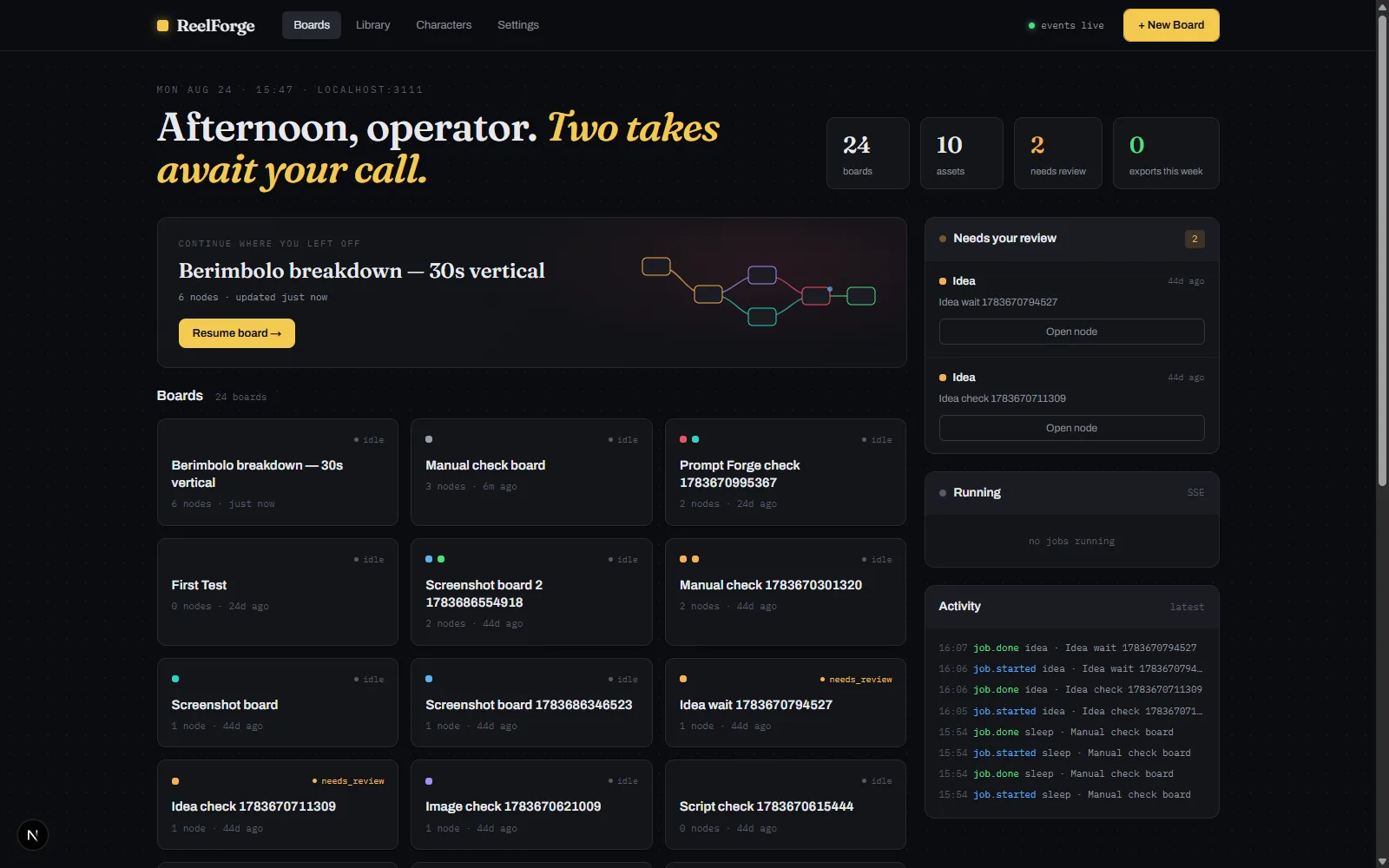
All of that surfaces on a boards dashboard: a review queue and a live activity feed, so the queue is never a black box.
Details I’m proud of
Provenance is complete. Every asset records what produced it: the node, the prompt, the model, the provider, the parameters, and its parent assets. You can always answer “where did this frame come from”.
Character Studio handles recurring characters: build a reference set once, and consistency becomes a trained artefact rather than a prompt you keep retyping.
Export runs through a real media pipeline: crossfades, caption burn-in, loudness normalisation, 1080×1920 out.
Where it stands
Roughly 44,000 lines, built in a week of orchestrated agent work. A prototype: the architecture is settled, the taste layer is still being tuned.