Why I built it instead of buying it
A regulated firm owes its staff real training, and not just on one topic: AML/CFT every year, technology risk and cyber hygiene, business continuity. The market answer is an off-the-shelf e-learning subscription, and those courses are written for everyone, which means they are written for nobody: generic typologies, generic red flags, a quiz you can click through while doing something else. I was paying for content I then had to supplement anyway.
So I wrote the courses against the primary instruments myself and built the platform to deliver them. What started as one AML/CFT course is now the firm’s internal training function: AML/CFT and proliferation financing, IT security, and business continuity management, all running on one platform, all saying exactly what the firm needs them to say. The course content stays internal. The platform is the part I can talk about.
What the learner gets
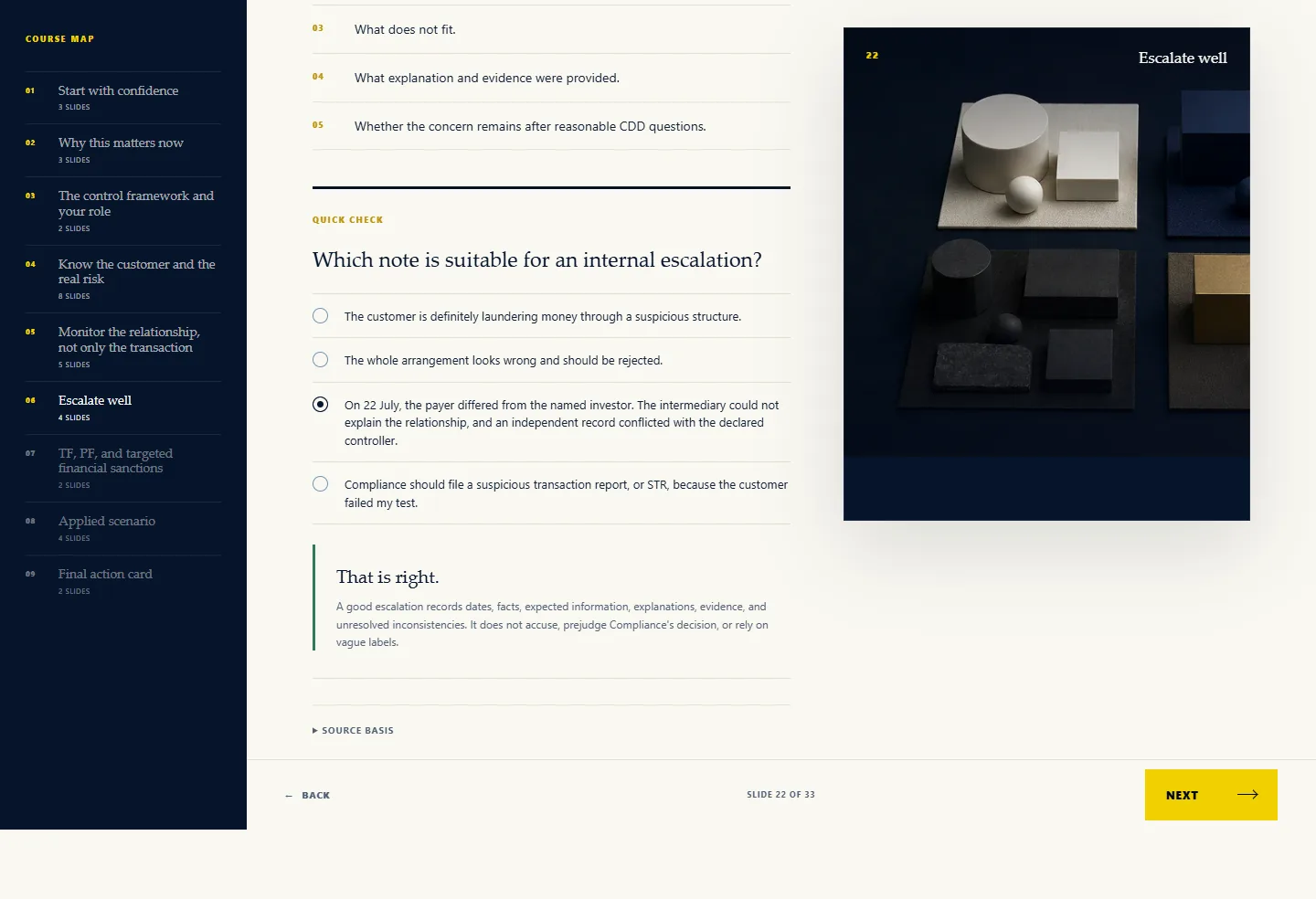
Each course runs as guided slides with formative checks along the way, so people find out they’ve drifted before the assessment does it for them.
The assessment is the part I refused to compromise on. Grading happens where the learner can’t reach it, a second sitting is never a memory test of the first, and each learner is locked to one live attempt at a time. Retries are unlimited; the pass mark is not negotiable.
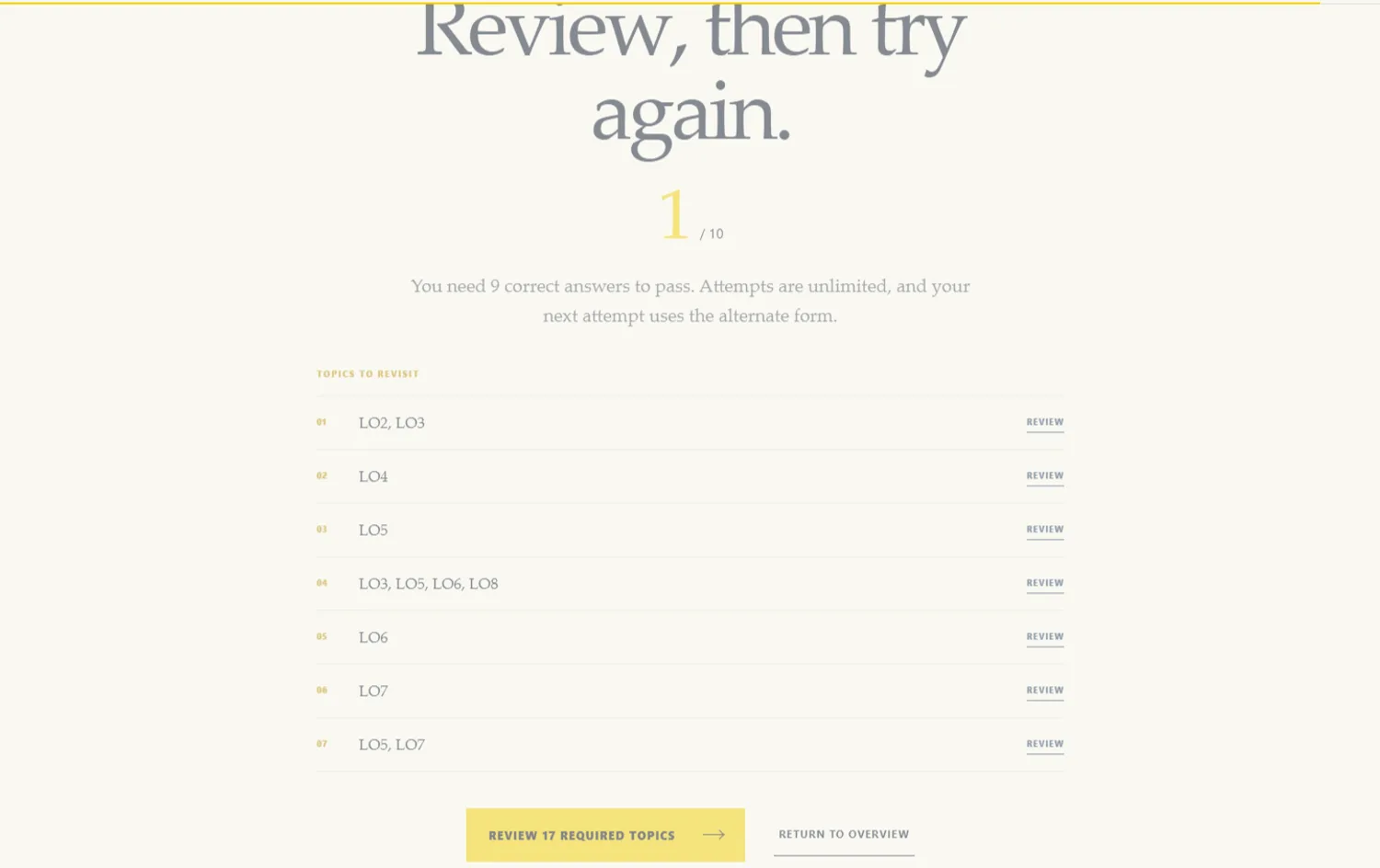
The part I like most is what happens on a fail. Rather than “try again”, the platform maps wrong answers back to learning objectives and tells you which ones to revisit. A failed attempt becomes a reading list.
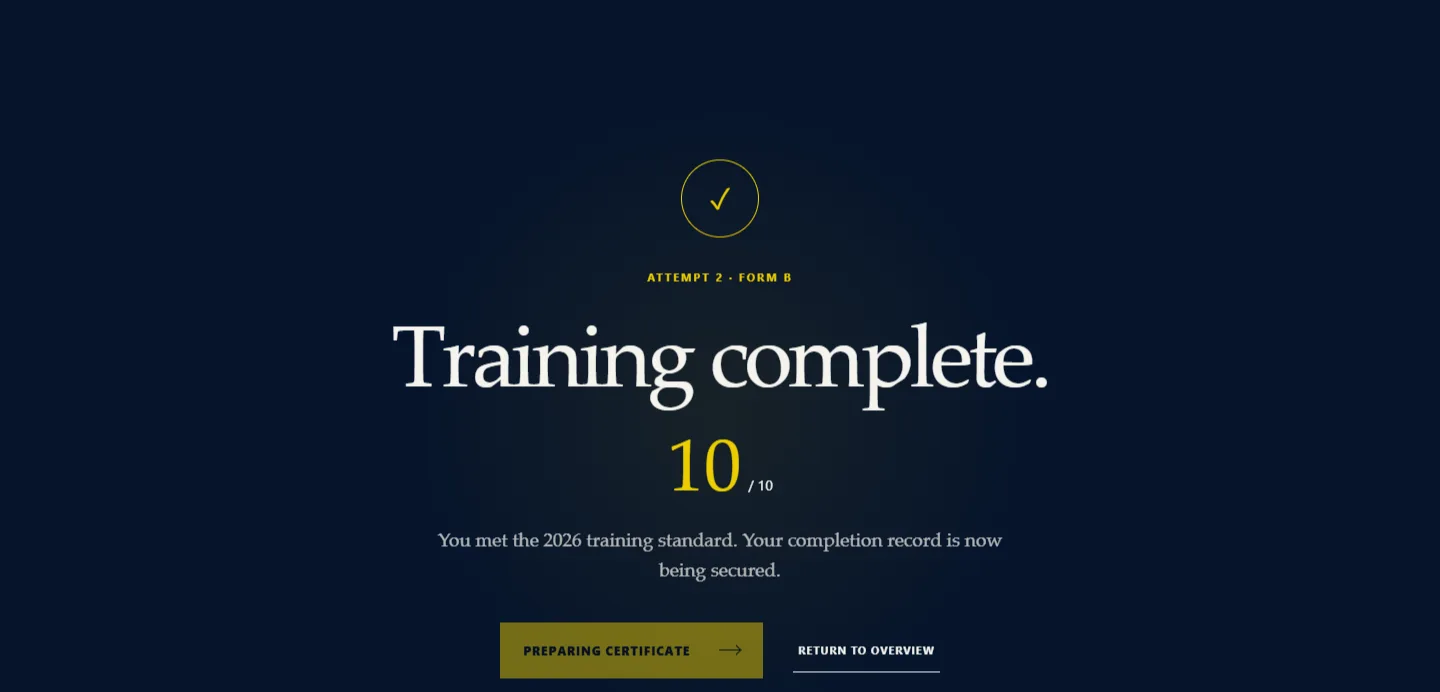
On a pass it issues a serial-numbered certificate that can be independently verified, not just filed. When an auditor asks who completed training and when, the answer is a record with a check attached rather than a spreadsheet row.
Where it stands
Shipped and running. It replaced the subscription, three separate training obligations now run through one system, and the training finally says what I want it to say.