What it is
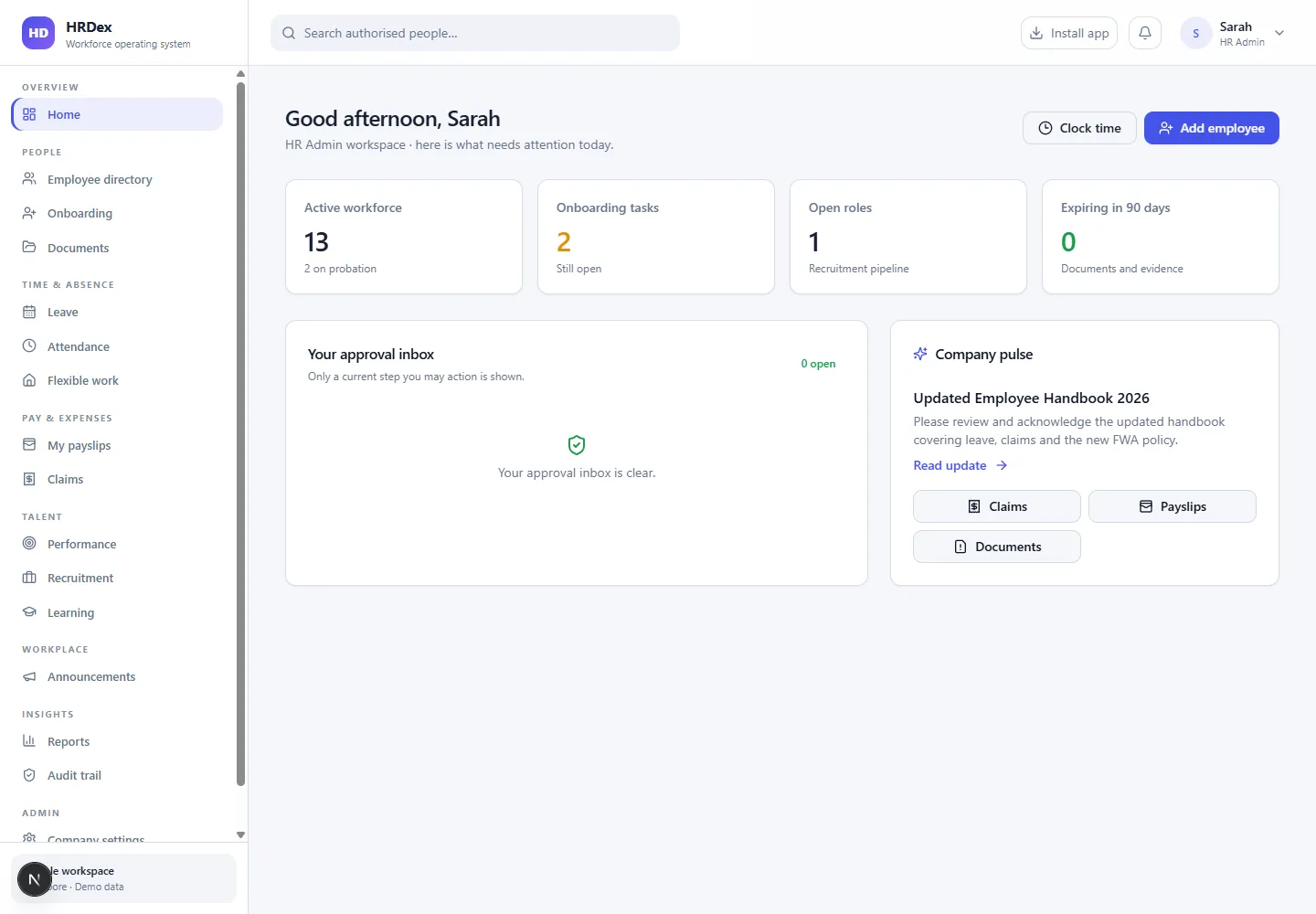
HRDex is a workforce operating system built for a Singapore employer: employee self-service, manager approvals, core HR, leave, claims, payroll preparation, recruitment, goals, learning, documents, announcements and reporting, all under one audit history. Most HR systems treat permissions as an afterthought bolted onto a role dropdown. HRDex treats them as the actual product.
How it works
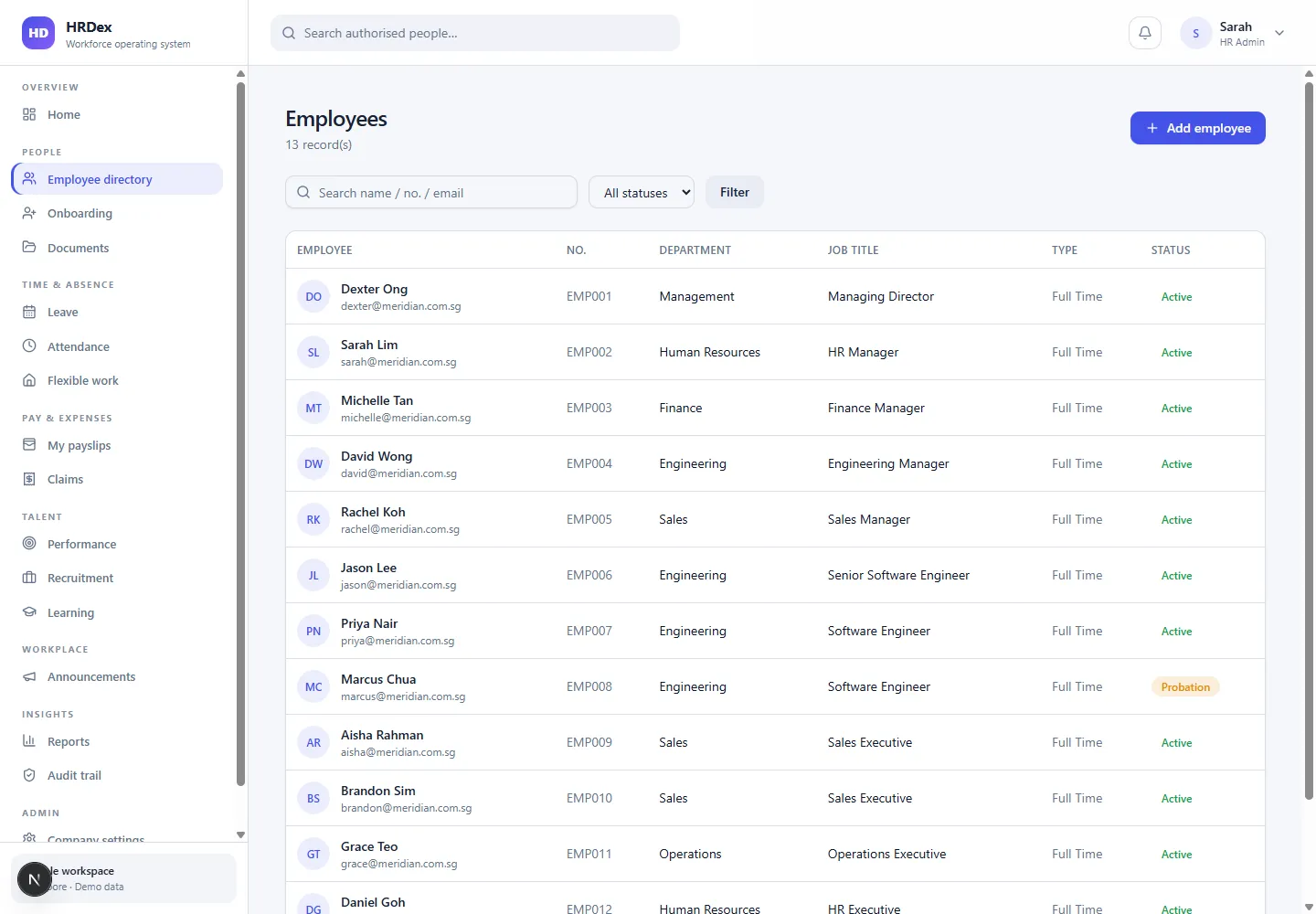
Access control is the spine of the product. Authority in the system has a single verifiable root, permissions are resolved on the server rather than trusted from the client, and what any user can see is scoped by their actual working relationships: a manager’s view covers their direct reports and nothing beyond them.
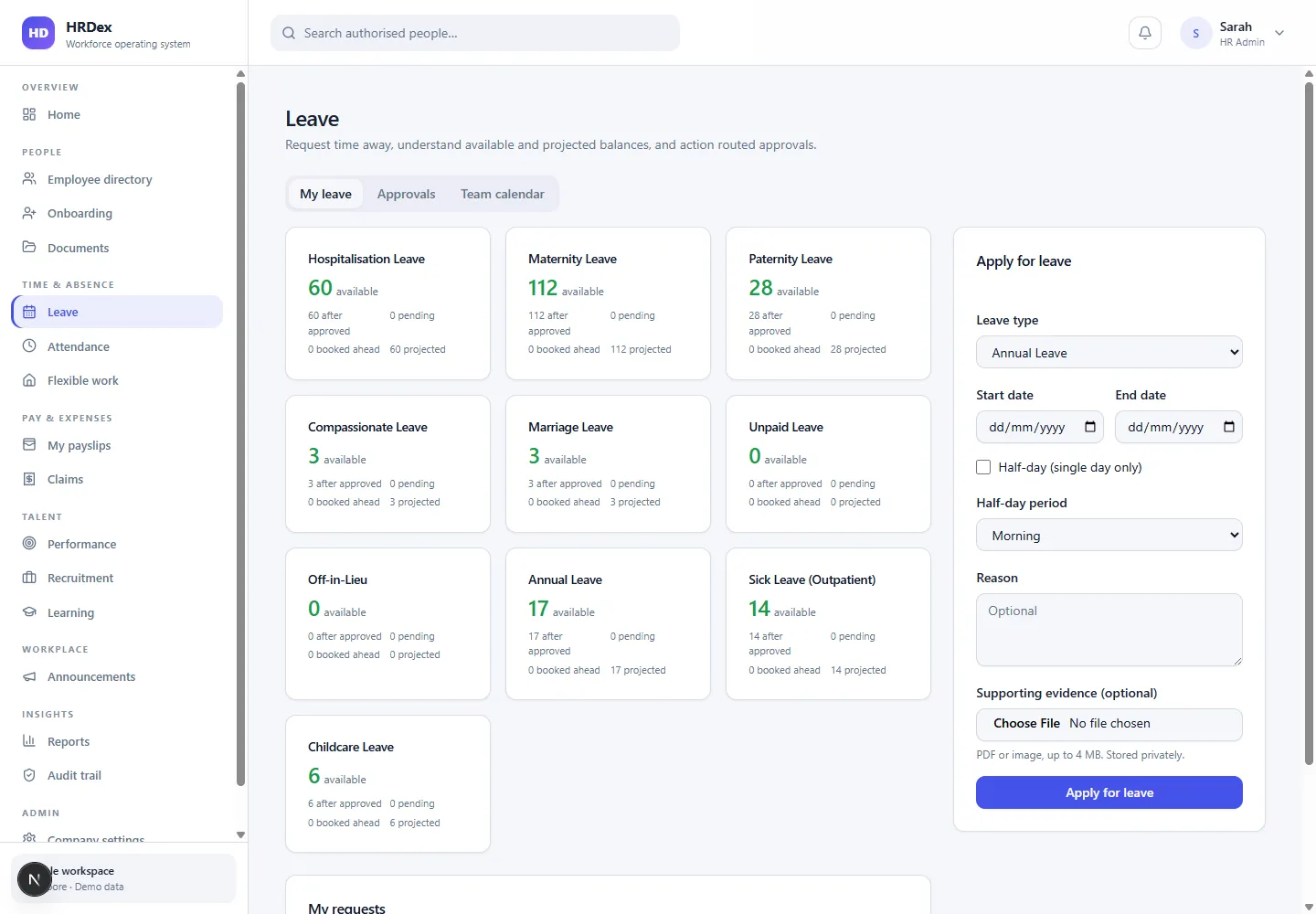
Leave, claims and flexible-work requests all run through one approval engine rather than three. A request has one owner at a time, only that owner can act on it, requesters cannot approve their own request, and an administrator override requires a recorded reason. Leave balances are protected against overlap and double-booking, with a forecast showing days approved, days on hold, days available to book, and where the balance lands if everything pending gets approved.
Details worth pointing at
Sensitive fields (NRIC/FIN, bank account numbers) are encrypted at rest, with only the last four digits kept in clear for search, and salary is masked from roles without permission to see it. Claims carry monthly caps, and reimbursement only counts once it carries a recorded payroll batch reference. Payroll moves through snapshot, review, approval and lock, and employees only ever see locked snapshots, through a private, year-filterable payslips hub. It installs as a PWA, and nothing sensitive is ever cached: authenticated pages, reports and payslips stay network-only.
Where it stands
Feature-complete for a single organisation: HR, time, claims, payroll, recruitment, learning and reporting all run end to end against seeded demo data. What remains is deliberately unglamorous: independent verification of the statutory tables and production hardening, before real employee records go anywhere near it. Built, and still being built.